
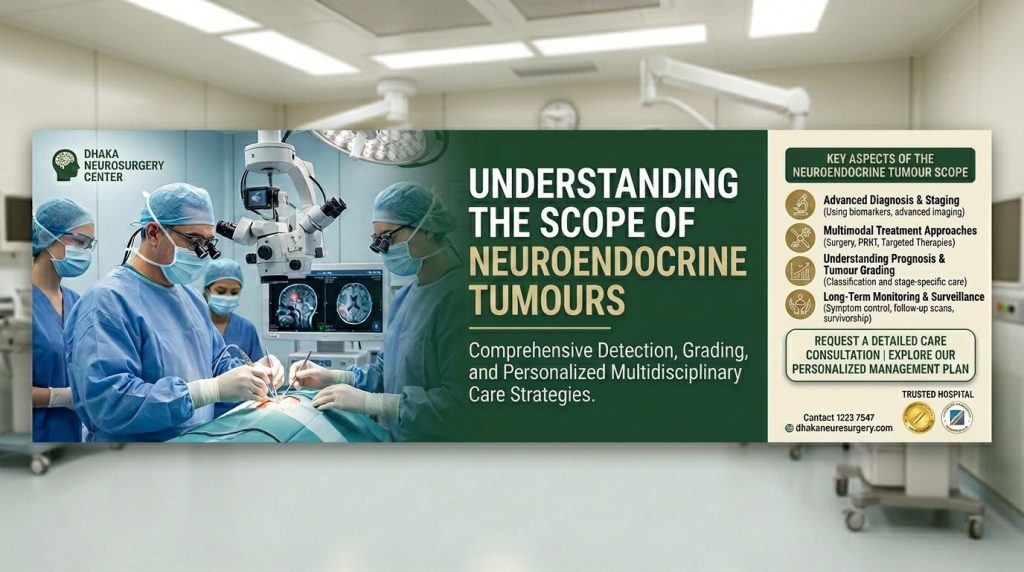

Understanding the Scope of Neuroendocrine Tumours
When Steve Jobs passed away in 2011, many were surprised to learn that his death was caused by a rare form of pancreatic cancer known as a neuroendocrine tumour. This brought a global spotlight to a group of unusual and often misunderstood cancers that defy simple categorization. In the medical world, students are often told, “When you hear hoofbeats, think of horses, not zebras,” a reminder to look for common diagnoses first.
They are complex, can arise almost anywhere in the body, and behave in ways that are vastly different from more common cancers. Understanding the scope of NETs is the first step toward demystifying this challenging disease.
What Exactly Are Neuroendocrine Tumours?
To understand NETs, you have to break down the name:
- “Neuro” refers to the nervous system.
- “Endocrine” refers to the hormone-producing system.
Neuroendocrine cells are special cells found throughout the body. They act as messengers, receiving signals from the nervous system and responding by producing and releasing hormones into the bloodstream. These hormones regulate everything from our digestion and metabolism to our breathing and heart rate.
A neuroendocrine tumour is a growth that arises from these specialized cells. Because these cells are present in nearly every organ, a NET can develop almost anywhere.
A critical aspect of NETs is their differentiation and grade.
- Well-differentiated NETs (Grade 1 or 2) are typically slow-growing. The cells look more like normal neuroendocrine cells. These are often referred to as “carcinoid tumours,” especially when found in the lungs or intestines.
- Poorly-differentiated Neuroendocrine Carcinomas (NECs) (Grade 3) are aggressive and fast-growing. These high-grade cancers behave much more like other aggressive cancers.
The “Where”: A Tumour That Can Appear Almost Anywhere
Unlike lung cancer which is found in the lungs or colon cancer in the colon, NETs have a vast geographical scope within the body. The most common sites include:
- The Gastrointestinal (GI) Tract: This is the most frequent location, accounting for over 60% of NETs. They can be found in the small intestine, appendix, stomach, rectum, and colon.
- The Pancreas: Pancreatic NETs (pNETs), like the one Steve Jobs had, arise from the hormone-producing islet cells of the pancreas.
- The Lungs: Lung NETs are the second most common type and are often discovered incidentally on a chest X-ray.
- Less Common Sites: NETs can also develop in the thymus gland, adrenal glands (pheochromocytoma), thyroid (medullary thyroid cancer), and even the skin (Merkel cell carcinoma).
The “What”: The Spectrum of Symptoms
The symptoms of a NET are incredibly varied and depend on three key factors: the tumour’s location, its size, and whether it is “functional” or “non-functional.”
1. Symptoms from Tumour Growth (Non-Functional Tumours)
Many NETs do not overproduce hormones. In these cases, symptoms are caused by the physical presence of the tumour pressing on organs or tissues. These symptoms are often vague and can be mistaken for other conditions:
- GI NETs: Abdominal pain, bloating, diarrhea, or a bowel obstruction.
- Lung NETs: Persistent cough, wheezing, shortness of breath, or recurrent pneumonia.
- Pancreatic NETs: Abdominal or back pain, jaundice (yellowing skin), or indigestion.
2. Symptoms from Hormone Overproduction (Functional Tumours)
This is what makes NETs unique. “Functional” tumours release excessive amounts of hormones, leading to a distinct set of symptoms known as a clinical syndrome.
The most well-known of these is Carcinoid Syndrome. This typically occurs when a GI tract NET has spread (metastasized) to the liver. The liver can no longer break down the excess hormones (like serotonin) before they enter the general circulation. Symptoms include:
- Flushing: A sudden, warm, reddish-purple discoloration of the face and upper chest.
- Diarrhea: Often severe, watery, and difficult to control.
- Wheezing and Shortness of Breath: Similar to asthma.
- Heart Palpitations: A rapid or irregular heartbeat.
Other functional pNETs can cause specific syndromes:
- Insulinoma: Overproduces insulin, causing dangerously low blood sugar (hypoglycemia).
- Gastrinoma: Overproduces gastrin, leading to severe stomach ulcers (Zollinger-Ellison Syndrome).
The Challenge of Diagnosis: A Diagnostic Odyssey
Because of their rarity and vague, slow-onset symptoms, NETs are notoriously difficult to diagnose. The average time from the first symptom to a correct diagnosis can be five to seven years. During this “diagnostic odyssey,” patients are often misdiagnosed with conditions like Irritable Bowel Syndrome (IBS), Crohn’s disease, asthma, or anxiety.
Diagnosing NETs requires a specialized approach:
- Blood and Urine Tests: Measuring for tumour markers like Chromogranin A (CgA) or hormones like serotonin (measured by its byproduct, 5-HIAA, in a 24-hour urine test).
- Specialized Imaging: Standard CT and MRI scans are used, but the gold standard is a specific type of PET scan called a Gallium-68 DOTATATE scan. This scan uses a radioactive tracer that binds to receptors on the surface of most NET cells, causing them to “light up” and revealing their location anywhere in the body.
- Biopsy: A tissue sample is essential to confirm the diagnosis and determine the tumour’s grade.
A Personalized Approach to Treatment
There is no one-size-fits-all treatment for NETs. The strategy depends on the tumour’s type, location, grade, stage, and whether it is functional. For slow-growing, indolent tumours, the initial approach might even be “watchful waiting.”
Key treatment modalities include:
- Surgery: The only potential cure, aimed at removing the primary tumour and any localized spread.
- Somatostatin Analogues (SSAs): These drugs (like octreotide and lanreotide) are the workhorses of NET treatment. They mimic a natural hormone to help control the symptoms of carcinoid syndrome and can also slow or stop tumour growth in many patients.
- Targeted Therapy: Drugs that attack specific pathways that cancer cells use to grow and divide.
- Peptide Receptor Radionuclide Therapy (PRRT): A “smart bomb” therapy where a radioactive particle is attached to a molecule that seeks out and binds to NET cells, delivering targeted radiation directly to the tumours.
- Chemotherapy: Generally reserved for more aggressive, high-grade NECs or advanced NETs that are no longer responding to other treatments.
Living with a neuroendocrine tumour is often a marathon, not a sprint. But with growing awareness, more sophisticated diagnostic tools, and an expanding arsenal of innovative treatments, the outlook for patients is brighter than ever. Understanding the broad and complex scope of this “zebra” cancer is the first, most powerful step in fighting it.
Disclaimer: This article is for informational purposes only. It is not intended as medical advice. Please consult with a qualified healthcare professional for any health concerns or before making any decisions related to your health or treatment.