Endoscopic Brain Tumor Surgery in Bangladesh
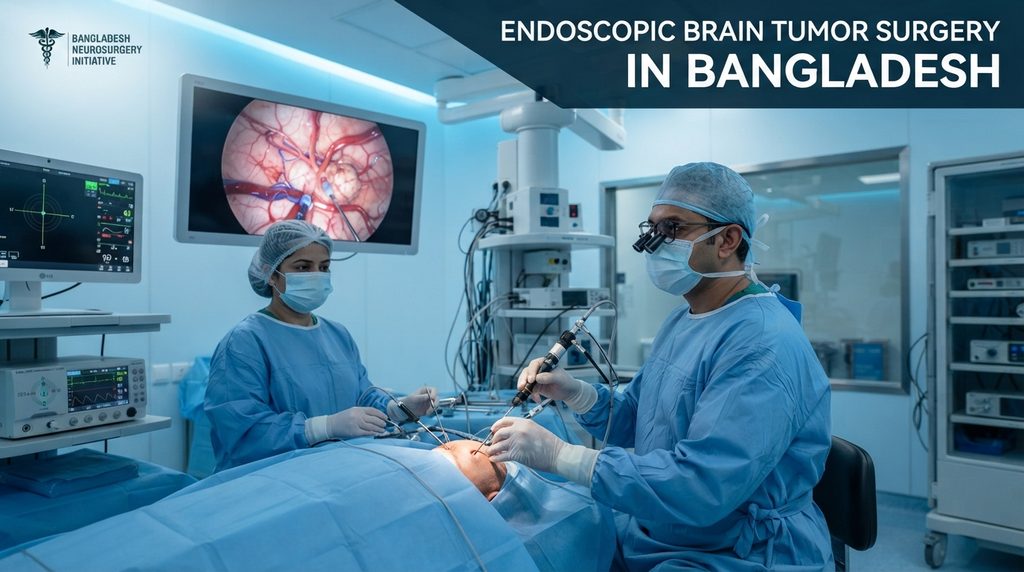
Endoscopic brain tumor surgery uses a tiny camera-equipped tube, offering minimally invasive access through narrow natural passages like the nose.
Success Stories…
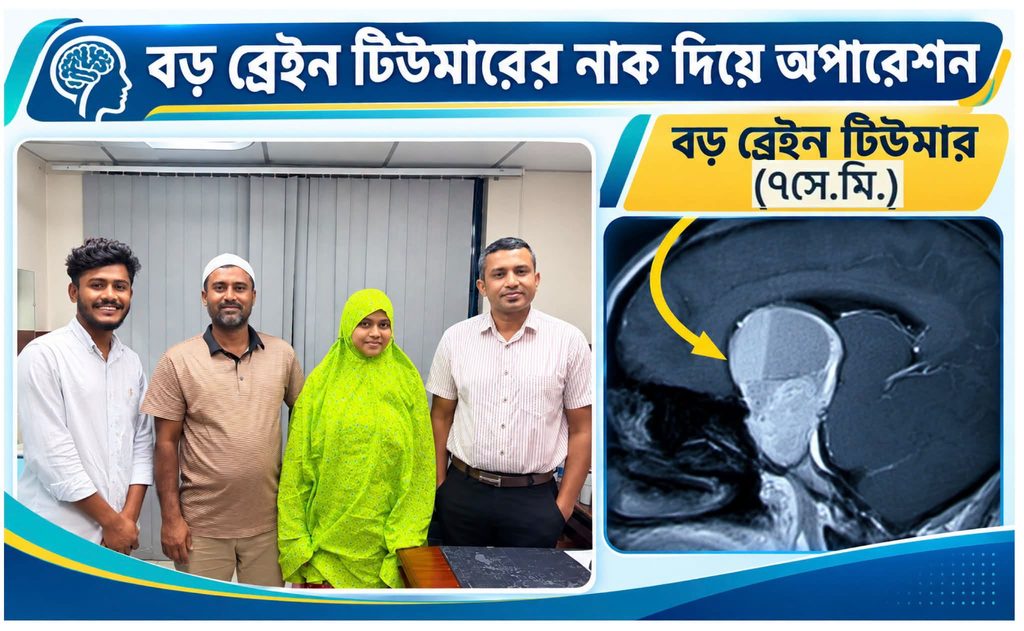
আলহামদুলিল্লাহ! নাক দিয়ে এন্ডোস্কোপিক সার্জারিতে ৭ সেন্টিমিটারের বিশাল ব্রেইন টিউমার অপসারণ, ফিরে এলো দৃষ্টিশক্তি
৭ সেন্টিমিটার সাইজের বিশাল এক ব্রেইন টিউমারে আক্রান্ত হয়ে এক জটিল পরিস্থিতির মুখোমুখি হয়েছিলেন এই রোগী। টিউমারের তীব্র চাপে তার ডান চোখের দৃষ্টিশক্তি সম্পূর্ণ হারিয়ে গিয়েছিল। অস্ত্রোপচারটি অত্যন্ত উচ্চ ঝুঁকিপূর্ণ (High Risk) হওয়ায় আগে একাধিক চিকিৎসক অপারেশন করতে রাজি হননি।
পরবর্তীতে সঠিক সময়ে সিদ্ধান্ত নিয়ে আমরা সম্পূর্ণ নাক দিয়ে Endoscopic Endonasal Approach (EEA) পদ্ধতির মাধ্যমে সফলভাবে সম্পূর্ণ টিউমারটি বের করে আনি। মাথার খুলি না কেটে, কোনো দৃশ্যমান দাগ ছাড়াই এই জটিল সার্জারি সম্পন্ন হয়।
মাথার খুলি না কেটে নাক দিয়ে নিখুঁত ব্রেইন টিউমার অপারেশন (আলহামদুলিল্লাহ)
মস্তিষ্কের অন্যতম জটিল স্থান পিটুইটারি গ্ল্যান্ডের টিউমার অপসারণে এখন আর মাথার খুলি কাটার প্রয়োজন হয় না। আধুনিক চিকিৎসার কল্যাণে সম্পূর্ণ নাক দিয়ে এন্ডোস্কোপিক এন্ডোন্যাসাল (Endoscopic Endonasal Approach) পদ্ধতির সাহায্যে এই অস্ত্রোপচার অত্যন্ত নিখুঁতভাবে সম্পন্ন করা সম্ভব।
সম্প্রতি এক রোগীর পিটুইটারি টিউমারের কারণে চোখের অপটিক নার্ভে তীব্র চাপ সৃষ্টি হয়েছিল, যার ফলে তিনি চোখে খুব কম দেখতেন। নাক দিয়ে সর্বাধুনিক এন্ডোস্কোপি মেশিনের সাহায্যে সম্পূর্ণ টিউমারটি সফলভাবে বের করার পর, আলহামদুলিল্লাহ তিনি এখন আবার স্বাভাবিকভাবে দেখতে পাচ্ছেন!
দ্রুত সুস্থতা: কাটা-ছেঁড়া না থাকায় ইনফেকশনের ঝুঁকি অনেক কম, ব্যথা কম হয় এবং রোগী খুব দ্রুত সুস্থ হয়ে বাড়ি ফিরতে পারেন।
কোনো দৃশ্যমান ক্ষত নেই: মাথার খুলি কাটা বা মাথার ত্বক কাটার প্রয়োজন হয় না বলে বাইরে থেকে দেখে বোঝার উপায় থাকে না যে এত বড় একটি ব্রেইন টিউমার অপারেশন হয়েছে।
চোখের আলো ফিরে পাওয়া: চোখের স্নায়ুর ওপর থাকা টিউমারের ক্ষতিকর চাপ দ্রুত দূর হওয়ায় দৃষ্টিশক্তি দ্রুত স্বাভাবিক অবস্থায় ফিরে আসে।
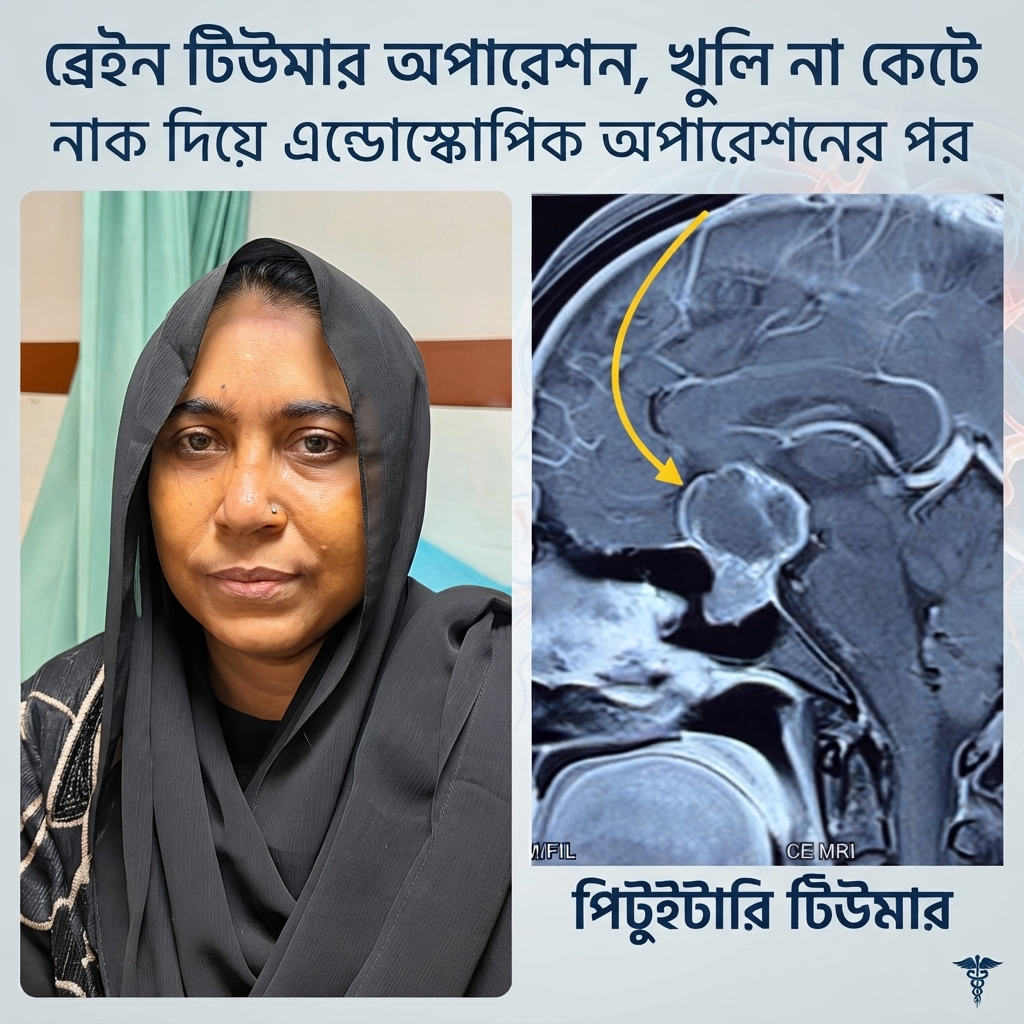
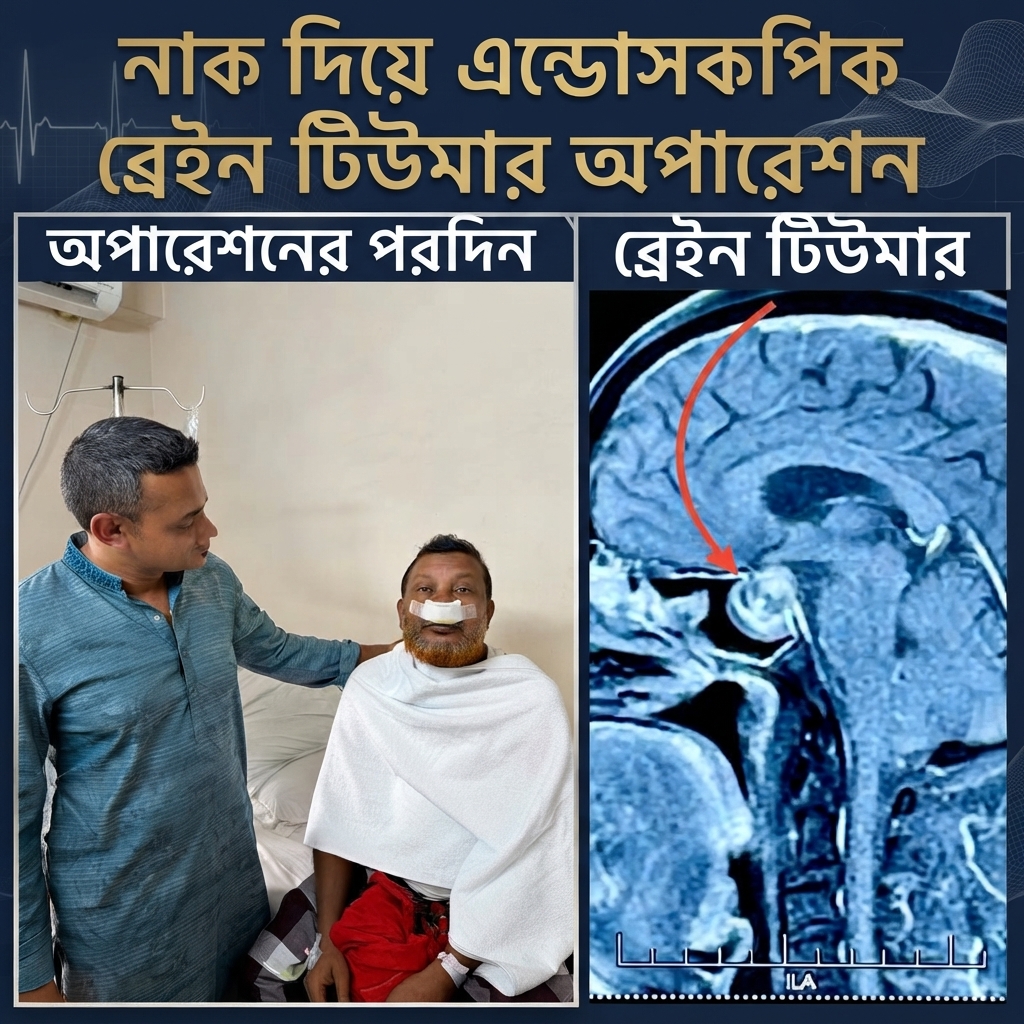
মাথার খুলি না কেটে নাক দিয়ে নিখুঁত পিটুইটারি টিউমার অপসারণ: ২৪ ঘণ্টার মধ্যেই ফিরে এলো চোখের আলো ও চোখের পাতার স্বাভাবিক ক্ষমতা! (আলহামদুলিল্লাহ)
ব্রেইন টিউমারের কারণে এক কঠিন সময় পার করছিলেন এই রোগী। টিউমারের তীব্র চাপে তাঁর ডান চোখের পাতা সম্পূর্ণ পড়ে গিয়েছিল (Ptosis) এবং তিনি ডান চোখে খুব ঝাপসা দেখতেন।
গতকাল রাতে সম্পূর্ণ নাক দিয়ে এন্ডোস্কোপিক এন্ডোন্যাসাল (Endoscopic Endonasal Approach) পদ্ধতির সাহায্যে তাঁর অস্ত্রোপচার সম্পন্ন করা হয়। আর অলৌকিক আনন্দের বিষয় হলো—আজ সকালেই রোগী স্বাভাবিকভাবে তাঁর ডান চোখের পাতা তুলতে পারছেন এবং চোখের দৃষ্টিশক্তিও আগের মতো স্বাভাবিক হয়ে এসেছে (আলহামদুলিল্লাহ)!
- কোনো দৃশ্যমান ক্ষত নেই: মাথার খুলি বা ত্বক কাটার বিন্দুমাত্র প্রয়োজন হয় না। ফলে অপারেশনের পর রোগীকে দেখে বোঝারই উপায় থাকে না যে তাঁর ব্রেইনের মতো সংবেদনশীল স্থানে এত বড় একটি অস্ত্রোপচার হয়েছে।
- দ্রুত দৃষ্টি ফিরে পাওয়া: চোখের অপটিক নার্ভ ও স্নায়ুর ওপর থাকা টিউমারের ক্ষতিকর চাপ সঙ্গে সঙ্গে সরে যায়, ফলে দৃষ্টিশক্তি ও চোখের পাতার পক্ষাঘাত দ্রুত ঠিক হয়ে যায়।
- দ্রুত রিকভারি: ক্ষতের কষ্ট ও ব্যথা কম থাকায় এবং ইনফেকশনের ঝুঁকি না থাকায় রোগী ২৪ থেকে ৪৮ ঘণ্টার মধ্যেই স্বাভাবিক চলাফেরা করতে পারেন।
Endoscopic Brain Tumor Surgery represents a major leap in modern neurosurgery in Bangladesh. By taking advantage of natural pathways—such as the nostrils—or utilizing tiny, keyhole incisions in the skull, this minimally invasive approach allows neurosurgeons to access and remove deep-seated brain tumors without large surgical openings, reducing recovery time and minimizing complications.
What is Endoscopic Brain Tumor Surgery?
Endoscopic brain tumor surgery utilizes a high-definition endoscope—a thin, rigid tube equipped with a powerful light source and a 4K camera. The endoscope delivers panoramic visualization of deep brain structures, allowing surgeons to navigate around critical nerves and blood vessels with exceptional clarity.
In Bangladesh, endoscopic neurosurgery is most commonly used for:
- Pituitary Adenomas: Removed via the transsphenoidal route (through the nose, leaving no visible external scars).
- Ventricular Tumors: Tumors inside the fluid-filled cavities (ventricles) of the brain.
- Skull Base Tumors: Such as chordomas, craniopharyngiomas, and Rathke cleft cysts.
- Hydrocephalus Associated with Tumors: Addressed via Endoscopic Third Ventriculostomy (ETV) to relieve brain pressure.
Key Advantages over Traditional Surgery
- No Visible External Scars: For transnasal procedures, access is entirely internal through the nasal passages.
- Minimal Brain Retraction: Reaches deep-seated tumors without pushing aside or damaging healthy brain tissue.
- Shorter ICU & Hospital Stay: Patients generally recover much faster than with a traditional craniotomy.
- Reduced Pain and Bleeding: Less tissue trauma translates to lower post-operative pain and lower infection risks.
Best Hospitals for Endoscopic Brain Tumor Surgery in Bangladesh
Several leading tertiary hospitals and specialized neurological centers in Bangladesh now feature dedicated endoscopic suites, neuronavigation systems, and experienced skull-base neurosurgeons.
Top Private Hospitals:
- Evercare Hospital (Dhaka & Chattogram): Features high-end HD/4K endoscopic systems, neuronavigation integration, and a dedicated multidisciplinary skull-base team (neurosurgeons alongside ENT specialists).
- Square Hospital (Dhaka): Equipped with advanced endoscopic tools, specialized neuro-anesthesia care, and comprehensive post-operative rehabilitation services.
- United Hospital (Dhaka): Well-regarded for complex pituitary tumor resections using combined endoscopic transsphenoidal techniques.
- Asgar Ali Hospital & BRB Hospital (Dhaka): Rapidly expanding centers with experienced senior neurosurgeons offering affordable endoscopic options.
Top Government & Specialized Hospitals:
- National Institute of Neurosciences & Hospital (NINS), Agargaon, Dhaka: The country’s premier government institute for brain disorders, performing a high volume of endoscopic pituitary and skull-base operations at subsidized costs.
- Bangabandhu Sheikh Mujib Medical University (BSMMU), Shahbag, Dhaka: Renowned for research, specialized faculty, and expert endoscopic surgical care.
- Dhaka Medical College Hospital (DMCH): Features specialized neurosurgical units handling complex, high-volume endoscopic brain surgeries.
Costing of Endoscopic Brain Tumor Surgery in Bangladesh
Costs vary depending on whether the procedure is performed at a government or private facility, the complexity of the tumor, and the duration of the hospital stay.
| Expense Category | Government Hospitals (NINS / BSMMU / DMCH) | Top Private Hospitals (Evercare / Square / United) |
| Total Estimated Package | BDT 60,000 – BDT 180,000 | BDT 3,500,000 – BDT 7,500,000+ |
| ICU & Cabin Charges (Per Day) | BDT 1,000 – 3,000 | BDT 15,000 – 35,000 (ICU) |
| OT & Surgeon Charges | Subsidized / Minimal | BDT 1,500,000 – 3,500,000 |
| Specialized Disposable Instruments | BDT 40,000 – 90,000 (Out-of-pocket) | Included / BDT 80,000 – 1,500,000 |
Note: Histopathology/biopsy analysis, pre-op hormone panels, and post-op hormonal replacement therapies (if required for pituitary tumors) incur separate costs.
Step-by-Step Surgical Process (Transnasal Endoscopic Procedure)
- Pre-Operative Preparation: High-resolution MRI/CT scans map out nasal passages and brain structures; hormone levels are evaluated.
- Anesthesia & Navigation Setup: General anesthesia is administered, and the neuronavigation system (“Brain GPS”) is calibrated.
- Nasal Access: An ENT specialist or neurosurgeon guides the thin endoscope through one nostril up into the sphenoid sinus at the back of the nasal cavity.
- Tumor Resection: The surgeon opens the thin bony wall (sella turcica) covering the tumor and removes it using microscopic suction and micro-instruments under high-definition camera view.
- Skull Base Reconstruction: The surgical area is sealed using nasal mucosal grafts or tissue glues to prevent any spinal fluid leakage (CSF leak).
- Post-Operative Recovery: The patient recovers in the Neuro-ICU or Step-Down ICU for 24 hours without external scalp dressings.
Frequently Asked Questions (10 FAQs)
1. Is endoscopic brain surgery suitable for all types of brain tumors?
No. Endoscopic surgery is ideal for deep, central tumors like pituitary adenomas, skull-base tumors, or ventricular lesions. Large cortical or superficial tumors are still better managed via traditional craniotomy or microscopic surgery.
2. Will there be any visible scars on my face or head?
For transnasal endoscopic surgery (through the nose), there are zero visible scars. For keyhole endoscopic procedures, a tiny skin incision is made that is easily hidden within the hairline.
3. Is endoscopic brain tumor surgery available in Bangladesh government hospitals?
Yes. Advanced specialized institutes like NINS and BSMMU regularly perform endoscopic brain tumor operations at highly affordable rates.
4. How long does the operation take?
An endoscopic transnasal brain surgery typically takes 2 to 5 hours, depending on the tumor’s size, consistency, and vascularity.
5. How many days will I need to stay in the hospital?
Hospital stay is significantly shorter compared to open surgery. Patients typically spend 1 day in the Neuro-ICU and 2 to 4 days in a general cabin, usually returning home within 3 to 5 days.
6. What are the potential risks or complications?
Complications are rare but can include cerebrospinal fluid (CSF) leakage through the nose, transient hormone imbalances, nasal congestion, bleeding, or localized infection.
7. How soon can I return to normal daily activities?
Most patients resume light daily routines within 1 to 2 weeks. However, strenuous physical exercise and blowing the nose forcibly should be avoided for 4 to 6 weeks to ensure proper tissue healing.
8. Will my sense of smell be permanently affected?
Temporary nasal congestion and minor alteration of smell are common for a few weeks post-surgery. In the vast majority of cases, full olfactory function returns completely.
9. Is a team of surgeons required for this operation?
Yes, most specialized centers in Bangladesh utilize a dual-surgeon approach—combining a skilled Neurosurgeon and an Endoscopic ENT Surgeon—to maximize precision and safety.
10. What follow-up tests are needed after surgery?
A follow-up MRI scan is routinely scheduled 2 to 3 months post-operation to confirm complete tumor clearance. Pituitary tumor patients will also require hormonal evaluations with an endocrinologist.