Microscopic Brain Tumor Surgery in Bangladesh
Microscopic brain tumor surgery uses high-powered illumination and magnification, allowing neurosurgeons to safely remove tumors while preserving delicate nearby healthy tissue.

Success Stories…
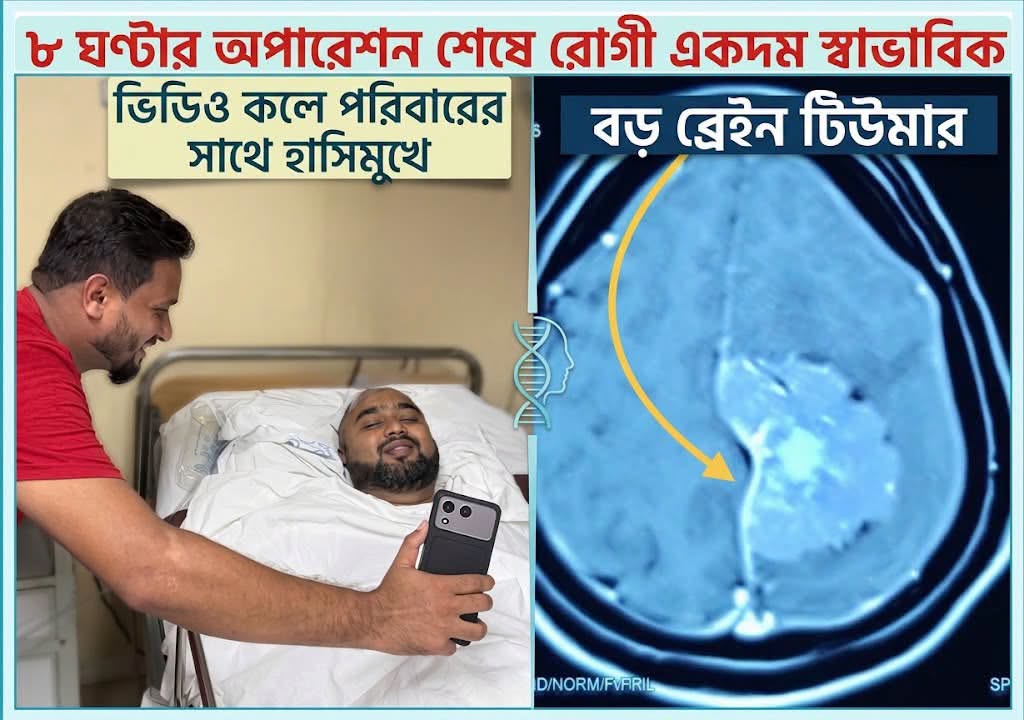
৮ ঘণ্টার দীর্ঘ অপারেশন শেষে যখন রোগী বললেন, ‘স্যার, বাসায় ভিডিও কল দিয়ে পরিবারের সাথে কথা বলব…’” (আলহামদুলিল্লাহ)
একজন নিউরোসার্জনের জীবনের সবচেয়ে বড় সার্থকতা আর অনুপ্রেরণা লুকিয়ে থাকে অপারেশনের পর রোগীর এই এক চিলতে হাসির ভেতরেই!
রোগীর মস্তিষ্কে একটি বেশ বড় আকৃতির ব্রেইন টিউমার ছিল। টিউমারটির অবস্থানের কারণে অস্ত্রোপচারের সময় রোগীর ডান হাত ও পা সম্পূর্ণ পক্ষাঘাতগ্রস্ত (Paralyzed) হয়ে যাওয়ার প্রবল ঝুঁকি ছিল। এমন একটি জটিল পরিস্থিতি সামলে টানা ৮ ঘণ্টা ধরে অত্যন্ত সতর্কতার সাথে মাইক্রো-নিউরোসার্জারি সম্পন্ন করা হয়।
অস্ত্রোপচারের মাধ্যমে সম্পূর্ণ টিউমারটি সফলভাবে বের করে আনা সম্ভব হয়েছে। আর সবচেয়ে আনন্দের বিষয় হলো—অপারেশন শেষে রোগীর ডান হাত ও পায়ের শক্তি একদম স্বাভাবিক রয়েছে (আলহামদুলিল্লাহ)।
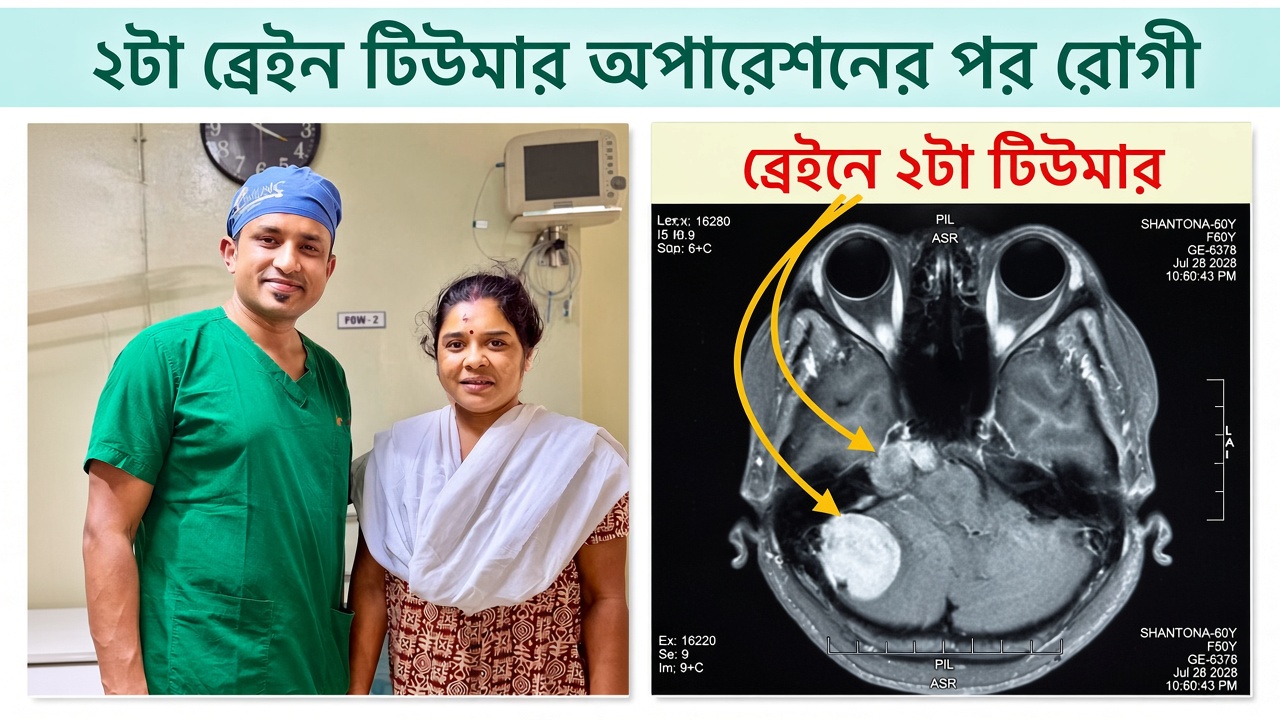
“মরে যাবো, তাও ব্রেইনের ২টা টিউমার অপারেশনের রিস্ক নেব না!”
অপারেশনের কথা শুনে ভয় পাওয়া রোগীর এমন আকুতি খুব একটা অস্বাভাবিক নয়। দুটি বড় ব্রেইন টিউমারের কথা শুনে চরম প্যানিক ও হতাশায় ভুগছিলেন এই রোগী ও তাঁর পরিবার। ভেবেছিলেন, অপারেশনের টেবিলে বুঝি জীবনটাই শেষ হয়ে যাবে!
আমাদের চেম্বারে আসার পর তাঁকে বৈজ্ঞানিক ব্যাখ্যার মাধ্যমে সাহস দিই এবং আধুনিক মাইক্রো-নিউরোসার্জারির নিরাপত্তা সম্পর্কে আশ্বস্ত করি। পরম করুণাময়ের ওপর ভরসা রেখে তিনি অপারেশনের সিদ্ধান্ত নেন।
দ্রুত সুস্থতা: জটিল অপারেশন হলেও কোনো স্নায়বিক ক্ষতি ছাড়াই রোগী দ্রুত সুস্থ হয়ে ওঠেন এবং গতকাল হাসিমুখে ছাড়পত্র (Discharge) নিয়ে বাড়ি ফিরে গেছেন (আলহামদুলিল্লাহ)। মাথার সম্পূর্ণ খুলি না কেটে, গত সোমবার কানের পেছনে মাত্র একটি ছোট কাটা/ফুটোর (Keyhole Micro-Neurosurgery) মাধ্যমে হাই-পাওয়ার মাইক্রোস্কোপ ব্যবহার করে গভীর সংবেদনশীল অংশ থেকে দুটি টিউমারই সম্পূর্ণভাবে বের করে আনা হয়।
Microscopic Brain Tumor Surgery represents a cornerstone of modern neurosurgery in Bangladesh. By combining high-powered magnification, bright illumination, and advanced instrumentation, this technique allows neurosurgeons to operate deep within the delicate structures of the brain with extreme precision—removing tumors while protecting critical neurological functions like speech, vision, and movement.
What is Microscopic Brain Tumor Surgery?
Microscopic brain tumor surgery utilizes a high-precision operating microscope (such as ZEISS Pentero or Kinevo systems) that magnifies the surgical field up to 40 times. Rather than relying on the naked eye, surgeons can distinguish healthy brain tissue from tumor borders, visualize micro-blood vessels, and preserve delicate cranial nerves that measure less than a millimeter in diameter.
Key Surgical Technologies Used in Bangladesh:
- Operating Microscopes: Provide 3D depth perception and high-definition illumination.
- Neuronavigation (Brain GPS): Uses pre-operative MRI/CT scans to guide the surgeon directly to the tumor with millimeter accuracy.
- CUSA (Cavitron Ultrasonic Surgical Aspirator): Uses ultrasonic vibration to break down and gently vacuum tough tumor tissue without harming surrounding tissue.
- Intraoperative Neuromonitoring (IONM): Continuously tracks spinal cord and nerve activity during surgery to prevent paralysis or speech deficits.
Best Hospitals for Microscopic Brain Tumor Surgery in Bangladesh
Bangladesh now hosts several world-class neurosurgical units with state-of-the-art operating theaters and dedicated Neuro-ICU setups.
Top Private Hospitals:
- Evercare Hospital (Dhaka & Chattogram): Features modern digital neuro-operating suites, high-end operating microscopes, 24/7 dedicated Neuro-ICU, and experienced full-time neurosurgical teams.
- Square Hospital (Dhaka): Equipped with advanced neuronavigation, high-powered ZEISS microscopes, and comprehensive post-operative rehabilitation facilities.
- United Hospital (Dhaka): Well-known for handling complex skull base and pediatric microscopic brain surgeries with specialized neuro-anesthesia care.
- BRB Hospital & Labaid Specialized Hospital (Dhaka): Highly accessible centers with experienced senior neurosurgeons and modern surgical setups.
Top Public & Specialized Government Hospitals:
- National Institute of Neurosciences & Hospital (NINS), Agargaon, Dhaka: The premier government center for neurosurgery in Bangladesh, offering state-of-the-art surgical facilities at nominal government costs.
- Dhaka Medical College Hospital (DMCH): Handles high volumes of complex brain tumor cases with dedicated neurosurgical units.
- Bangabandhu Sheikh Mujib Medical University (BSMMU), Shahbag, Dhaka: Renowned for research-backed, highly experienced surgical teams and affordable treatment options.
Costing of Microscopic Brain Tumor Surgery in Bangladesh
The total cost depends heavily on whether the surgery is performed at a private or public hospital, the complexity and location of the tumor, and the duration of the ICU stay.
| Expense Category | Public Hospitals (NINS / DMCH / BSMMU) | Top Private Hospitals (Evercare / Square / United) |
| Total Estimated Cost | BDT 50,000 – BDT 1,500,000 | BDT 3,500,000 – BDT 8,000,000+ |
| Bed & ICU Stay (Per Day) | Nominal / BDT 1,000 – 3,000 | BDT 15,000 – 35,000 (ICU) |
| Surgical Charges & OT | Minimal / Subsidized | BDT 1,500,000 – 3,500,000 |
| Implants & Disposable Instruments | BDT 30,000 – 80,000 (Out-of-pocket) | Included in package / BDT 80,000 – 1,500,000 |
Note: Post-surgical treatments like Histopathology/Biopsy, Chemotherapy, or Radiotherapy (if the tumor is malignant) incur separate costs.
Step-by-Step Surgical Process
- Pre-Operative Workup: Comprehensive contrast-enhanced MRI/CT scans, blood tests, cardiac clearance, and pre-anesthetic checkups.
- Neuro-Anesthesia & Positioning: The patient is placed under general anesthesia, and the head is held stable using a specialized pin-fixation frame.
- Craniotomy: A precise incision is made in the scalp, and a small bone flap is temporarily removed to access the brain.
- Microscopic Resection: The microscope is brought into position. The surgeon carefully dissects the tumor away from healthy tissue using ultrasonic aspirators and micro-instruments.
- Closure: Bleeding is meticulously controlled, the dura layer is stitched closed, the bone flap is reattached using titanium plates/screws or sutures, and the scalp is closed cosmetically.
- Recovery & Neuro-ICU: The patient recovers in a specialized Neuro-ICU for 24–48 hours for vital neurological monitoring.
Frequently Asked Questions (10 FAQs)
1. What is the main advantage of microscopic brain tumor surgery?
The primary advantage is precision. High magnification and bright lighting allow surgeons to maximize tumor removal while protecting vital blood vessels and healthy brain tissue, reducing neurological deficits.
2. How long does a microscopic brain tumor surgery take in Bangladesh?
It typically takes between 4 to 8 hours depending on the tumor’s size, depth, and proximity to critical brain structures.
3. Is microscopic brain surgery available at government hospitals in Bangladesh?
Yes, advanced microscopic surgery is routinely performed at specialized government centers like NINS, DMCH, and BSMMU using modern operating microscopes.
4. How long is the hospital stay following surgery?
Patients typically spend 1 to 2 days in the Neuro-ICU followed by 3 to 5 days in a cabin or ward, with a total hospital stay of about 5 to 8 days.
5. What is the success rate of brain tumor surgery in Bangladesh?
For benign (non-cancerous) tumors, complete removal yields high success rates (over 90% long-term recovery). For malignant tumors, surgery successfully relieves brain pressure and sets up the stage for radiation/chemotherapy.
6. Will my head be shaved completely for the operation?
In most modern neurosurgical procedures, surgeons only shave a small strip of hair along the incision line, which can easily be covered by surrounding hair as it grows back.
7. Is the procedure painful?
No. The procedure is performed under full general anesthesia. Post-operative discomfort is managed effectively with intravenous pain medications.
8. What are the major risks associated with microscopic brain surgery?
Risks include post-operative bleeding, brain swelling, infection, speech or motor weakness, and seizures. However, modern techniques like intraoperative neuromonitoring significantly minimize these risks.
9. Can I go back to work after brain tumor surgery?
Most patients can resume light daily activities within 3 to 4 weeks and return to work within 6 to 8 weeks, depending on their recovery and whether additional treatments like radiotherapy are required.
10. What additional costs might arise after the surgery?
Additional costs include histopathology (biopsy) testing of the tumor tissue (BDT 4,000–12,000), follow-up MRI scans (BDT 8,000–15,000), and further oncology treatments (radiation or chemotherapy) if the tumor is cancerous.