Endoscopic ETV Surgery for Hydrocephalus in Bangladesh
Hydrocephalus surgery restores normal fluid circulation, relieving dangerous pressure inside the skull through shunt insertion or endoscopic brain procedures.

Success Stories…
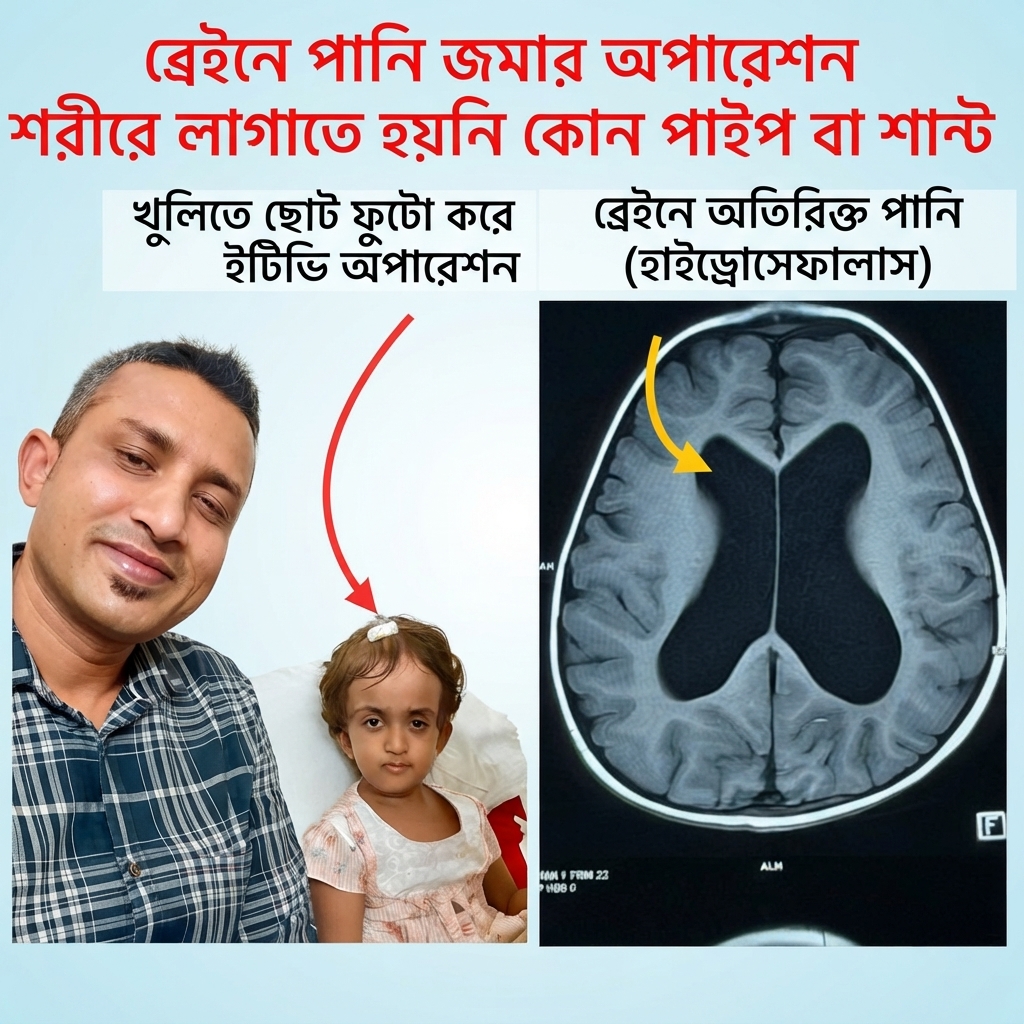
আলহামদুলিল্লাহ! শরীরে কোনো প্লাস্টিকের পাইপ ছাড়াই ব্রেইনে পানি জমার সফল অস্ত্রোপচার
ব্রেইনে পানি জমা বা হাইড্রোসেফালাস (Hydrocephalus) আক্রান্ত এক রোগীর সফল চিকিৎসার মাধ্যমে ফের ফুটফুটে হাসিতে ভরে উঠল একটি পরিবার। অতীতে এই রোগের নাম শুনলেই সবার চোখে ভেসে উঠত মাথায় ও পেটে দীর্ঘমেয়াদী প্লাস্টিকের ‘ভিপি শান্ট’ (VP Shunt) পাইপ বসানোর ভয়াল চিত্র। কিন্তু আধুনিক বিজ্ঞানের যুগে সেই কষ্টদায়ক দিন এখন অতীত!
উন্নত নিউরোসার্জারির মাধ্যমে কোনো ধরনের শান্ট পাইপ ছাড়াই সফলভাবে সম্পন্ন হলো এন্ডোস্কোপিক থার্ড ভেন্ট্রিকুলোস্টোমি (ETV) অপারেশন।
- ছোট ফুটা, বড় সাফল্য: রোগীর খুলিতে মাত্র একটি ছোট ফুটা (Keyhole) করে আধুনিক হাই-ডেফিনিশন ৪কে (4K) নিউরো-এন্ডোস্কোপ ভেতরে প্রবেশ করানো হয়।
- প্রাকৃতিক জলপ্রবাহ: ব্রেইনের অভ্যন্তরে জমে থাকা তরল (CSF) নিষ্কাশনের জন্য একটি বিকল্প প্রাকৃতিক পথ তৈরি করে দেওয়া হয়, যা তরলকে স্বাভাবিক নিয়মে শোষিত হতে সাহায্য করে।
অস্ত্রোপচারের মাত্র কয়েকদিনের মাথায় রোগী এখন সুস্থ ও স্বাভাবিক জীবনের দিকে এগিয়ে যাচ্ছেন।
আলহামদুলিল্লাহ! পাইপ ছাড়াই ৭ মাসের শিশুর মাথা অস্বাভাবিক বড় হওয়ার স্থায়ী সমাধান
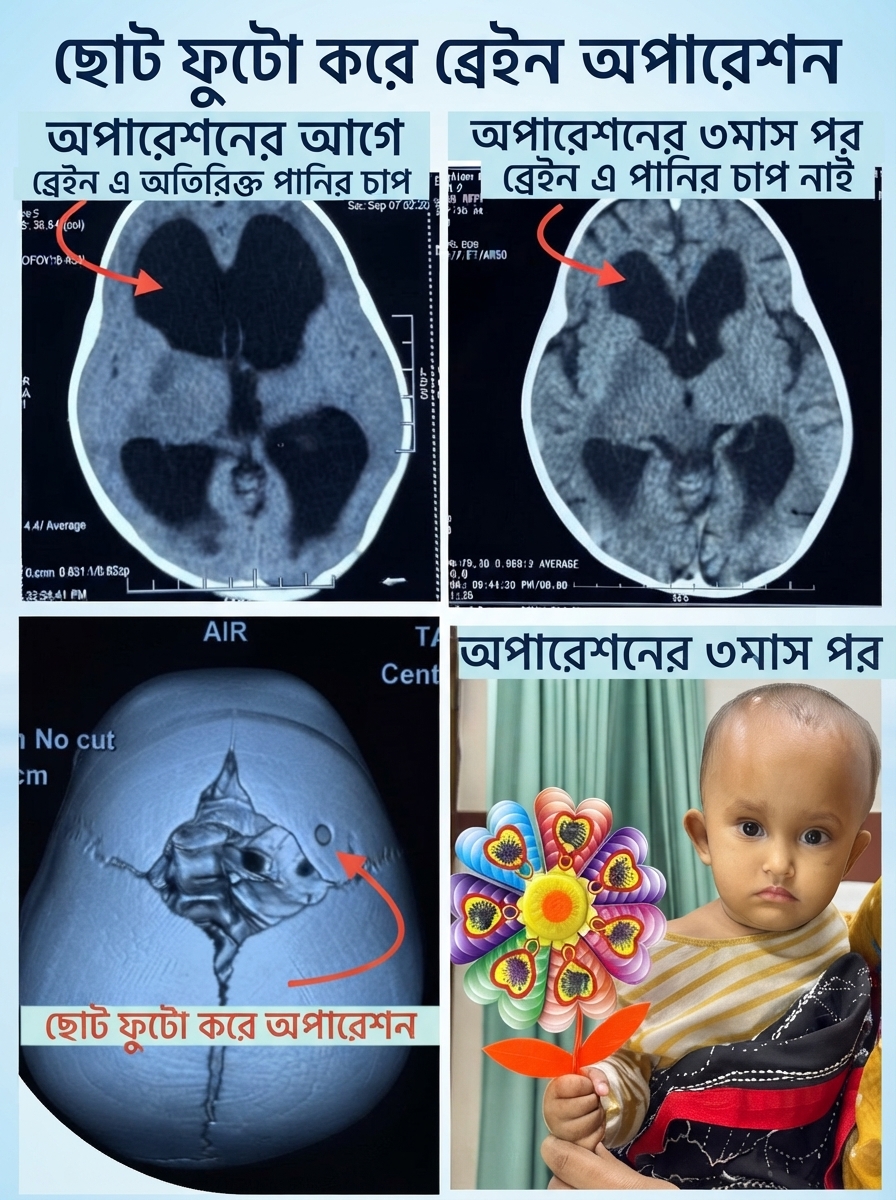
মাত্র ৭ মাস বয়সী এই নিস্পাপ শিশুটিকে যখন প্রথম আমাদের কাছে নিয়ে আসা হয়, তখন তার মাথার আকৃতি অস্বাভাবিকভাবে বড় হয়ে যাচ্ছিল। সিটি স্ক্যান (CT Scan) করে দেখা যায়, তার মস্তিষ্কে পানি চলাচলের স্বাভাবিক পথটি সম্পূর্ণ ব্লক হয়ে অতিরিক্ত তরল জমে গেছে—যার চিকিৎসাবিজ্ঞানসম্মত নাম হাইড্রোসেফালাস (Hydrocephalus)।
অতীতে এই সমস্যায় শিশুর শরীরে সারাজীবনের জন্য প্লাস্টিকের ‘ভিপি শান্ট’ পাইপ বসাতে হতো। কিন্তু আমরা সিদ্ধান্ত নিই সম্পূর্ণ পাইপ-মুক্ত আধুনিক চিকিৎসাপদ্ধতির।
অস্ত্রোপচার ও সাফল্য:
- মিনিম্যালি ইনভেসিভ কি-হোল সার্জারি: বাচ্চার খুলিতে মাত্র একটি ছোট ফুটো করে উন্নত হাই-ডেফিনিশন ক্যামেরার সাহায্যে Endoscopic ETV (Endoscopic Third Ventriculostomy) অপারেশন সম্পন্ন করা হয়।
- প্রাকৃতিক বিকল্প পথ: মস্তিষ্কের ভেতরে জমে থাকা অতিরিক্ত তরল (CSF) নিষ্কাশনের জন্য একটি বিকল্প প্রাকৃতিক রাস্তা তৈরি করে দেওয়া হয়, যাতে কোনো কৃত্রিম টিউব ছাড়াই পানি স্বাভাবিকভাবে প্রবাহিত হতে পারে।
- ৩ মাস পরের ফলোআপ: সম্প্রতি শিশুটি ৩ মাসের ফলোআপে এসেছে। মা-বাবার মুখে এখন স্বস্তির হাসি! সিটি স্ক্যানে দেখা গেছে, ব্রেইনে জমে থাকা অতিরিক্ত পানি ও পানির ক্ষতিকর চাপ সম্পূর্ণ চলে গেছে এবং বাচ্চার মাথার বিকাশ এখন একদম স্বাভাবিক (আলহামদুলিল্লাহ)।
অভিভাবকদের প্রতি বার্তা:
ছোট শিশুদের মাথা স্বাভাবিকের চেয়ে বড় মনে হলে, চোখ নিচের দিকে নেমে গেলে বা ঘন ঘন বমি হলে অবহেলা না করে দ্রুত নিউরোসার্জারি বিশেষজ্ঞের পরামর্শ নিন। আমাদের দেশেই এখন বিশ্বমানের নিউরো-এন্ডোস্কোপিক প্রযুক্তির মাধ্যমে জটিল ইটিভি অপারেশন অত্যন্ত সফলভাবে সম্পন্ন হচ্ছে।
Endoscopic Third Ventriculostomy (ETV) represents a transformative shift in hydrocephalus management across Bangladesh. Traditionally, hydrocephalus—a condition marked by excessive cerebrospinal fluid (CSF) accumulation inside the brain—was treated primarily via Ventriculoperitoneal (VP) Shunt implantation. However, modern neuroendoscopy allows neurosurgeons to operate directly inside the brain’s fluid cavities through a micro-incision, creating a natural bypass route for CSF without placing foreign mechanical hardware.
What is Endoscopic ETV Surgery?
During an ETV procedure, a specialized high-definition neuroendoscope equipped with a camera and micro-instruments is inserted into the brain’s ventricles through a small keyhole opening in the skull. The neurosurgeon navigates to the floor of the third ventricle and creates a small perforation. This allows trapped CSF to bypass obstructions (such as aqueductal stenosis or deep brain tumors) and flow directly into the subarachnoid space to be reabsorbed naturally by the body.
Key Indications for ETV in Bangladesh:
- Aqueductal Stenosis: Narrowing of the passage connecting the third and fourth ventricles.
- Obstructive Hydrocephalus: Caused by posterior fossa tumors, pineal region tumors, or congenital cysts.
- Failed VP Shunt Management: Used as an alternative when patients experience recurrent shunt infections or mechanical blockages.
- Infant Hydrocephalus (ETV + CPC): Often combined with Choroid Plexus Cauterization (CPC) to decrease fluid production in infants.
Best Hospitals for ETV Surgery in Bangladesh
Several leading public and private medical institutions in Bangladesh offer advanced neuroendoscopic facilities with specialized pediatric and adult neuro-anesthesia teams.
Top Public & Specialized Hospitals:
- National Institute of Neurosciences & Hospital (NINS), Agargaon, Dhaka: The nation’s top public neurosurgical institute. NINS features dedicated neuro-endoscopic operating suites and pediatric neurosurgery departments offering ETV and ETV+CPC procedures at highly subsidized rates.
- Bangabandhu Sheikh Mujib Medical University (BSMMU), Shahbag, Dhaka: Renowned for research-backed care, experienced faculty, and specialized post-operative neurological monitoring.
- Dhaka Medical College Hospital (DMCH): Handles high volumes of pediatric and adult emergency obstructive hydrocephalus cases.
Top Private Hospitals:
- Evercare Hospital (Dhaka & Chattogram): Offers 4K digital neuroendoscopic towers, dedicated Pediatric ICUs (PICU), and round-the-clock neuro-anesthesia care.
- Square Hospital, Dhaka: Equipped with modern neuronavigation integration, specialized operating microscopes/endoscopes, and comprehensive post-op care setups.
- United Hospital & Bangladesh Specialized Hospital, Dhaka: Advanced tertiary facilities equipped with senior neurosurgical units proficient in complex endoscopic skull-base and intraventricular procedures.
- Bangladesh Paediatric Neurocare Centre, Dhaka: A specialized outpatient consultation and developmental tracking center for pediatric neurosurgical conditions.
Costing of ETV Surgery in Bangladesh
The overall cost of ETV surgery depends on the hospital category, surgeon’s expertise, procedure complexity (ETV alone vs. ETV + CPC), and length of ICU/PICU stay.
| Expense Category | Public Hospitals (NINS / BSMMU / DMCH) | Top Private Hospitals (Evercare / Square / United) |
|---|---|---|
| Total Estimated Package | BDT 30,000 – BDT 90,000 | BDT 220,000 – BDT 550,000+ |
| ICU / PICU Stay (Per Day) | Subsidized / BDT 1,000 – 3,000 | BDT 15,000 – 35,000 |
| Surgical & OT Charges | Nominal / Minimal | BDT 120,000 – 280,000 |
| Specialized Endoscopic Consumables | BDT 15,000 – 35,000 | Included or BDT 30,000 – 60,000 |
Note: Pre-operative contrast-enhanced MRI/CT scans (BDT 8,000–15,000) and post-operative follow-up imaging incur separate costs.
Key Advantages of ETV Over VP Shunt
- No Foreign Hardware: ETV eliminates the risk of mechanical shunt failure, tube disconnection, or abdominal catheter complications.
- Lower Infection Rates: Since no permanent foreign body remains inside the head or body, overall infection risks are substantially lower.
- One-Time Procedure: Successful ETV provides a permanent, natural drainage solution without requiring lifetime hardware adjustments or revisions.
- Ideal for Rural Patients: Highly advantageous for patients living in remote regions of Bangladesh with limited immediate access to neurosurgical care for emergency shunt revisions.
Frequently Asked Questions (10 FAQs)
1. What is the success rate of ETV surgery in Bangladesh?
When performed for obstructive hydrocephalus (such as aqueductal stenosis or tumors), ETV success rates range between 70% and 90%. Success is influenced by patient age, underlying cause, and pre-existing brain conditions.
2. How does ETV differ from a traditional VP Shunt?
A VP Shunt drains fluid using a permanent plastic tube from the brain to the abdomen. ETV creates a tiny natural hole inside the brain’s third ventricle to bypass the blockage internally without leaving any hardware in the body.
3. Is ETV suitable for all types of hydrocephalus?
No. ETV is primarily effective for obstructive (non-communicating) hydrocephalus where CSF flow is physically blocked. For non-obstructive (communicating) hydrocephalus, a VP shunt is usually preferred.
4. What is ETV + CPC surgery?
ETV + CPC combines Endoscopic Third Ventriculostomy with Choroid Plexus Cauterization. It opens a new drainage path while using gentle heat to reduce fluid production, significantly raising success rates in infants under 1–2 years old.
5. How long does an ETV operation take?
An ETV procedure usually takes between 1 to 2.5 hours under general anesthesia.
6. Will there be a large incision on my child’s head?
No. ETV is a keyhole endoscopic procedure requiring only a tiny incision (about 2–3 cm) hidden within the hairline, which heals quickly with minimal scarring.
7. What is the typical hospital stay after ETV surgery?
Patients generally stay 1 day in the ICU/PICU for neurological observation, followed by 2 to 4 days in a general cabin or ward, typically being discharged within 3 to 5 days.
8. What are the signs of ETV failure or closure?
Signs of ETV failure mirror hydrocephalus symptoms: severe headaches, persistent vomiting, drowsiness, irritability, bulging soft spot (in infants), or blurred vision. Early post-op follow-ups are critical.
9. Can an ETV procedure be repeated if it closes?
Yes. If the stoma (hole) created during ETV closes over time due to scarring, neurosurgeons can often perform a repeat neuroendoscopy to re-open the pathway.
10. Is ETV available in specialized government hospitals in Bangladesh?
Yes. Government specialized centers like NINS (Agargaon, Dhaka) routinely perform ETV and ETV+CPC surgeries using advanced endoscopic equipment at highly subsidized costs.