Brain Bypass Surgery in Bangladesh
Brain bypass surgery reroutes blood flow around blocked or damaged cerebral arteries using a grafted blood vessel to restore brain circulation.
Success Stories…
চার বছর আগে ছোট্ট ওমর আব্দুল্লাহর মাথার ডান পাশে চেন্নাইয়ে ব্রেন বাইপাস সার্জারি করা হয়েছিল।
রোগটির নাম ময়াময়া ডিজিজ (Moyamoya Disease)—যে রোগে মস্তিষ্কের রক্তনালীর সংকোচন বা বন্ধ হয়ে যাওয়ার কারণে বিশেষ করে শিশুদের স্ট্রোকের ঝুঁকি তৈরি হয়।
গত তিন বছর ধরে ওমর আমার চিকিৎসাধীন। চেন্নাইয়ের চিকিৎসকরা তখন বাম পাশেও আরেকটি বাইপাস অপারেশনের পরামর্শ দিয়েছিলেন। তবে আমি চেষ্টা করেছিলাম, অপারেশন ছাড়াই তাকে পর্যবেক্ষণ ও চিকিৎসার মাধ্যমে ভালো রাখা যায় কি না। আলহামদুলিল্লাহ, প্রায় তিন বছর সে ভালোই ছিল।
তবে সম্প্রতি স্ট্রোকের পূর্বলক্ষণ দেখা দেওয়ায় আর দেরি না করে এক সপ্তাহ আগে তার বাম পাশে সফল ব্রেন বাইপাস সার্জারি করা হয়। আলহামদুলিল্লাহ, অপারেশনের পর ওমর সম্পূর্ণ সুস্থ আছে এবং স্বাভাবিকভাবে আছে। ❤️

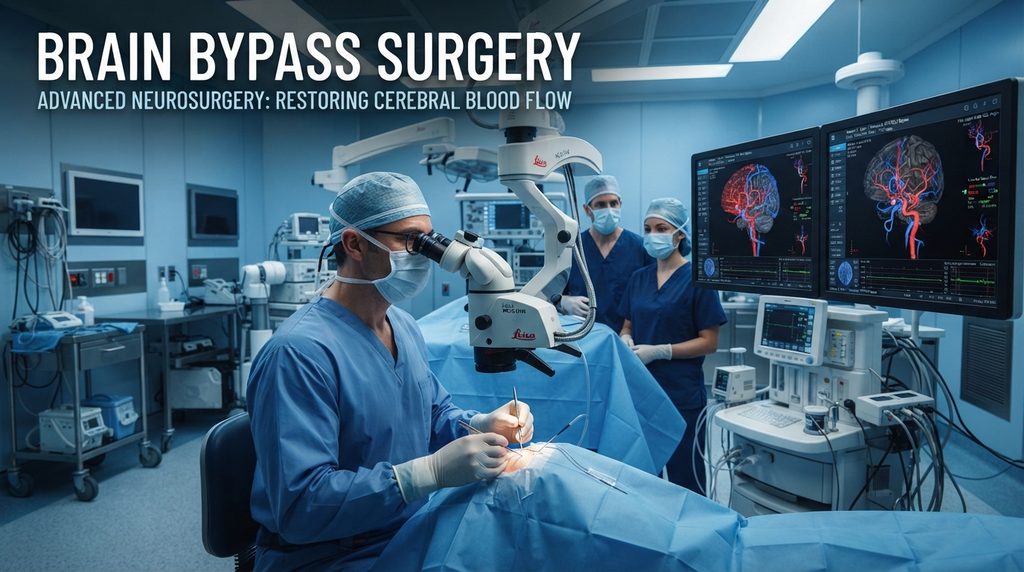
Brain Bypass Surgery—scientifically termed extra-cranial to intra-cranial (EC-IC) arterial bypass—is one of the most sophisticated, high-precision procedures in modern neurovascular surgery. Similar to how a cardiac bypass redirects blood around blocked heart arteries, a cerebral bypass creates a new route for blood flow to reach oxygen-starved regions of the brain.
In Bangladesh, neurovascular surgery has reached a milestone where specialized EC-IC bypass procedures are successfully performed locally, saving patients from high medical expenses abroad.
What is Brain Bypass Surgery and When is it Needed?
During a brain bypass, a neurosurgeon takes a donor blood vessel—either from the scalp (such as the Superficial Temporal Artery, or STA) or harvested from the leg/arm—and meticulously connects (anastomoses) it to an artery on the surface of the brain (such as the Middle Cerebral Artery, or MCA) using suture thread finer than a strand of human hair under a high-power operating microscope.
Primary Clinical Indications in Bangladesh:
- Moyamoya Disease: A progressive, rare arterial disease causing constriction of the main brain vessels at the skull base, common in pediatric and young adult populations.
- Complex or Giant Brain Aneurysms: Aneurysms that cannot be safely treated with standard clipping or coiling without cutting off blood flow to main brain regions.
- Severe Carotid Artery Stenosis / Occlusion: Chronic, non-operable arterial blockages causing recurrent Transient Ischemic Attacks (TIAs) or mini-strokes despite maximum medical management.
- Skull Base Tumors: Deep-seated brain tumors that envelope or require the surgical sacrifice of major cerebral arteries.
Types of Cerebral Bypass Procedures
- Direct Bypass (STA-MCA Bypass):
- The Superficial Temporal Artery (STA) from the scalp is directly joined to a branch of the Middle Cerebral Artery (MCA). Provides immediate improvement in cerebral blood flow.
- Indirect Bypass (EDAS / EMS):
- Frequently used for pediatric Moyamoya disease. Arterial tissue, muscle, or dura from the scalp is laid directly onto the brain surface, stimulating new blood vessel growth (neovascularization) over several months.
- High-Flow Bypass:
- Uses a longer vein graft (saphenous vein from the leg) or artery graft (radial artery from the arm) to transfer high volumes of blood flow to major brain areas.
Best Hospitals for Brain Bypass Surgery in Bangladesh
Brain bypass surgery requires advanced high-magnification operating microscopes, intraoperative vascular imaging, micro-vascular instruments, and specialized neuro-anesthesia and neuro-ICU teams.
Top Specialized Public & Academic Institutes:
- National Institute of Neurosciences & Hospital (NINS), Agargaon, Dhaka: The premier specialized government center for neurovascular care in Bangladesh. Equipped with modern micro-neurosurgery suites, intraoperative Doppler ultrasound, Digital Subtraction Angiography (DSA), and experienced neurovascular faculty providing subsidized bypass care.
- Bangabandhu Sheikh Mujib Medical University (BSMMU), Shahbag, Dhaka: Houses dedicated academic neurovascular surgery units with specialized pre-operative diagnostic imaging and long-term neuro-rehabilitation monitoring.
- Dhaka Medical College Hospital (DMCH), Dhaka: Equipped to manage complex neurovascular conditions and stroke cases through its senior neurosurgical wing.
Top Private Tertiary Hospitals:
- Evercare Hospital (Dhaka & Chattogram): Features high-end 4K digital neuro-operating suites, ZEISS surgical microscopes, intraoperative blood flow monitoring (ICG angiography), biplane DSA, and full 24/7 Neuro-ICU coverage.
- Square Hospital, Dhaka: Offers neuronavigation-guided micro-vascular surgery, continuous intraoperative neuromonitoring, and experienced neuro-interventional teams.
- United Hospital & Bangladesh Specialized Hospital, Dhaka: Modern tertiary centers equipped for complex skull base resections, cerebral revascularization, and neuro-critical care.
Costing of Brain Bypass Surgery in Bangladesh
Total surgical costs depend on whether the procedure is performed at a government or private hospital, the type of bypass (direct vs. indirect vs. high-flow), duration of hospital/ICU stay, and required pre-operative/post-operative angiograms.
| Expense Category | Public Hospitals (NINS / BSMMU / DMCH) | Top Private Hospitals (Evercare / Square / United) |
| Total Surgical Package | BDT 90,000 – BDT 250,000 (Out-of-pocket micro-sutures/supplies) | BDT 500,000 – BDT 1,100,000+ |
| Neuro-ICU Stay (Per Day) | Subsidized / BDT 1,500 – 4,000 | BDT 20,000 – 50,000 |
| Surgical & OT Charges | Free / Minimal | BDT 300,000 – 600,000 |
| Pre-Op Imaging (CTA / DSA) | BDT 5,000 – 30,000 | BDT 18,000 – 55,000 |
Frequently Asked Questions (10 FAQs)
1. What is Brain Bypass Surgery (EC-IC Bypass)?
It is a delicate microsurgical procedure that connects a healthy scalp or body blood vessel to a brain artery, redirecting extra blood flow around blocked or damaged cerebral vessels.
2. What conditions are treated with brain bypass surgery in Bangladesh?
It is primarily performed for Moyamoya disease, complex or giant un-clippable brain aneurysms, severe recurrent ischemic strokes from arterial occlusions, and skull base tumor resections.
3. Is brain bypass surgery safe in Bangladesh?
Yes. Specialized neurovascular units at centers like NINS, BSMMU, and top private tertiary hospitals use high-magnification operating microscopes and intraoperative vascular monitoring to safely perform cerebral revascularization.
4. How does an indirect bypass (EDAS) work for Moyamoya disease?
Indirect bypass places healthy, blood-vessel-rich tissue onto the brain surface. Over time, the brain naturally sprouts new micro-blood vessels (neovascularization) to supply deficient brain tissue.
5. How long does a brain bypass operation take?
Direct EC-IC micro-vascular bypass surgery typically takes between 4 to 8 hours depending on the complexity of the vessel connection and vascular mapping.
6. What is the hospital recovery duration after surgery?
Patients generally stay 2 to 4 days in the Neuro-ICU for strict blood pressure and vascular monitoring, followed by 5 to 7 days in a ward before discharge.
7. How is blood flow checked during and after surgery?
Surgeons use micro-Doppler ultrasound probes, Indocyanine Green (ICG) fluorescence angiography in the OT, and post-operative CT Angiography or DSA to confirm blood is actively flowing through the bypass graft.
8. Can brain bypass surgery reverse a past stroke?
A bypass cannot reverse permanent brain damage from a past major stroke, but it significantly improves blood flow to surrounding vulnerable tissue to prevent future mini-strokes or major strokes.
9. Are government subsidies available for this operation in Bangladesh?
Yes. Public institutions like NINS (Agargaon) offer heavily subsidized surgical care, low-cost ICU beds, and government welfare support for underprivileged patients needing complex neurovascular operations.
10. How long is the home recovery before returning to normal activities?
Most patients require 6 to 12 weeks of structured home rest, blood pressure monitoring, and rehabilitation before returning to light work and daily routines.