Microscopic PLID surgery in Bangladesh
Microscopic PLID surgery repairs herniated spinal discs, relieving compressed nerves to eliminate severe back pain and restore full lower-body mobility.
Success Stories…
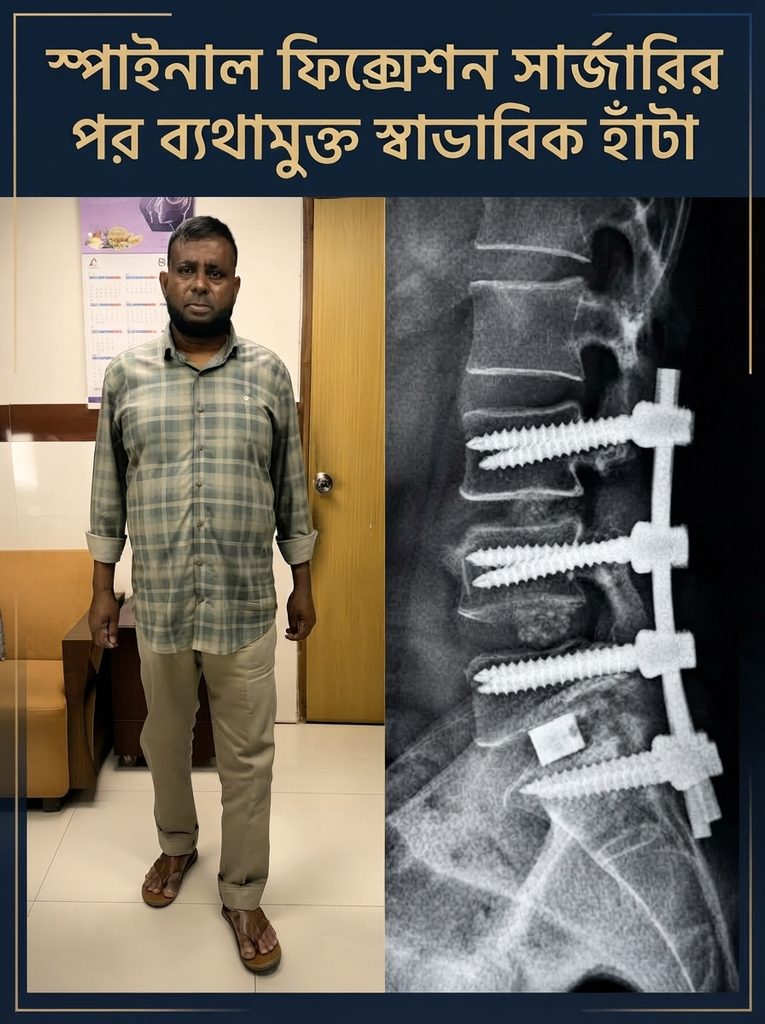
স্পাইন-ফিক্সেশন অপারেশনের পর ব্যথামুক্ত স্বাভাবিক জীবন—আলহামদুলিল্লাহ। ❤️
স্পনডাইলোলিসথেসিসের কারণে কোমরের হাড় স্বাভাবিক অবস্থান থেকে সরে গিয়েছিল। তীব্র ব্যথার কারণে হাঁটতেও পারছিলেন না।
স্পাইন-ফিক্সেশন অপারেশনের পর এখন তিনি স্বাভাবিকভাবে হাঁটছেন, ব্যথাও নেই—আলহামদুলিল্লাহ।
অপারেশনের পর করা কোমরের X-ray-তে দেখা যাচ্ছে, সরে যাওয়া হাড়টি পুনরায় প্রায় সম্পূর্ণ স্বাভাবিক অবস্থানে এসেছে। আলহামদুলিল্লাহ।
রোগীর স্বাভাবিক জীবনে ফিরে আসাটাই আমাদের সবচেয়ে বড় প্রাপ্তি। ❤️
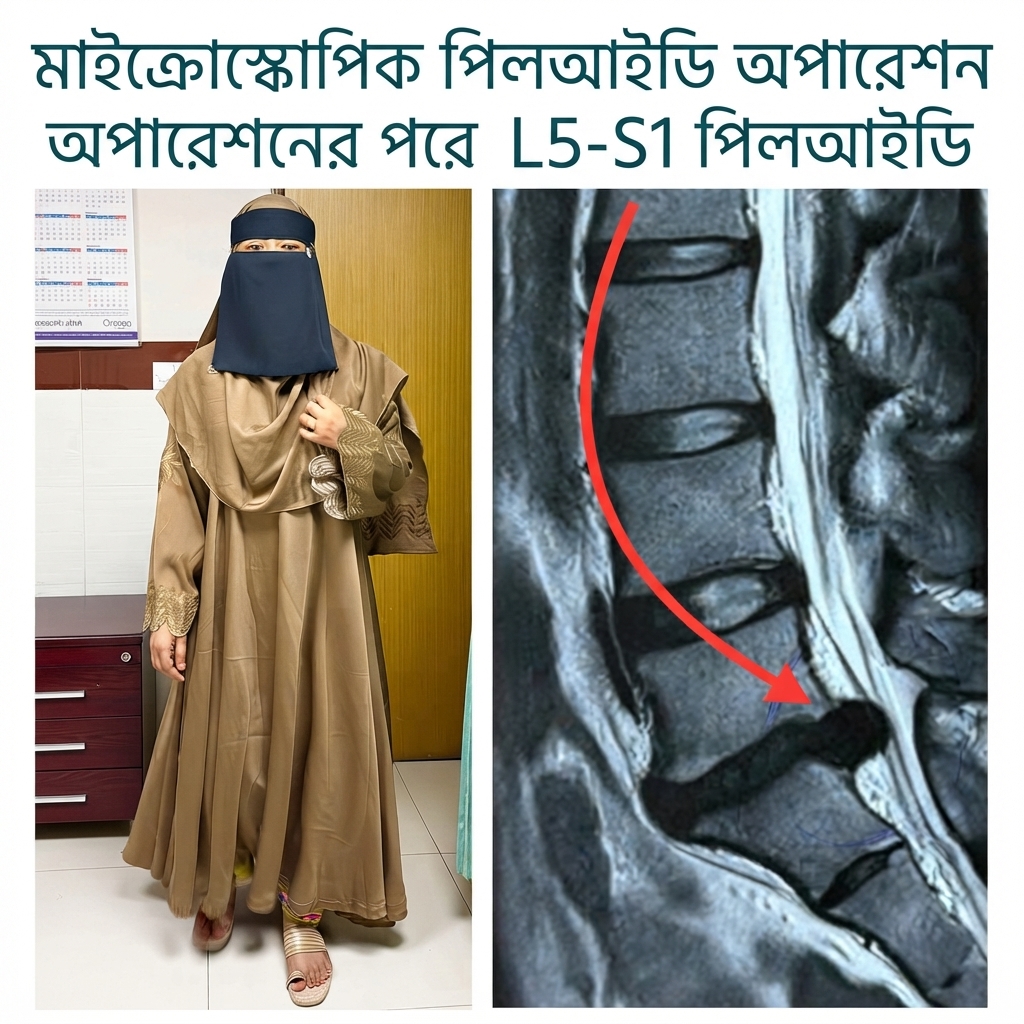
কোমরের L5-S1 ডিস্কের অধিকাংশ অংশ বের হয়ে গিয়ে তীব্র কোমর ও পায়ের ব্যথায় হাঁটতে পারছিলেন না।
অপারেশনের পর এখন নিজেই হেঁটে এসেছেন—আলহামদুলিল্লাহ, বর্তমানে কোনো ব্যথা নেই। ❤️
কোমর ব্যথামুক্ত স্বাভাবিক জীবন ফিরে পেতে, উপযুক্ত রোগীদের ক্ষেত্রে ছোট ছিদ্রের মাধ্যমে সর্বাধুনিক মাইক্রোস্কোপের সাহায্যে মাইক্রোস্কোপিক PLID (Microscopic PLID) সার্জারি একটি আধুনিক চিকিৎসা পদ্ধতি।
সঠিক রোগ নির্ণয় ও প্রয়োজনীয় চিকিৎসার জন্য বিশেষজ্ঞ নিউরোসার্জনের পরামর্শ নিন। ❤️
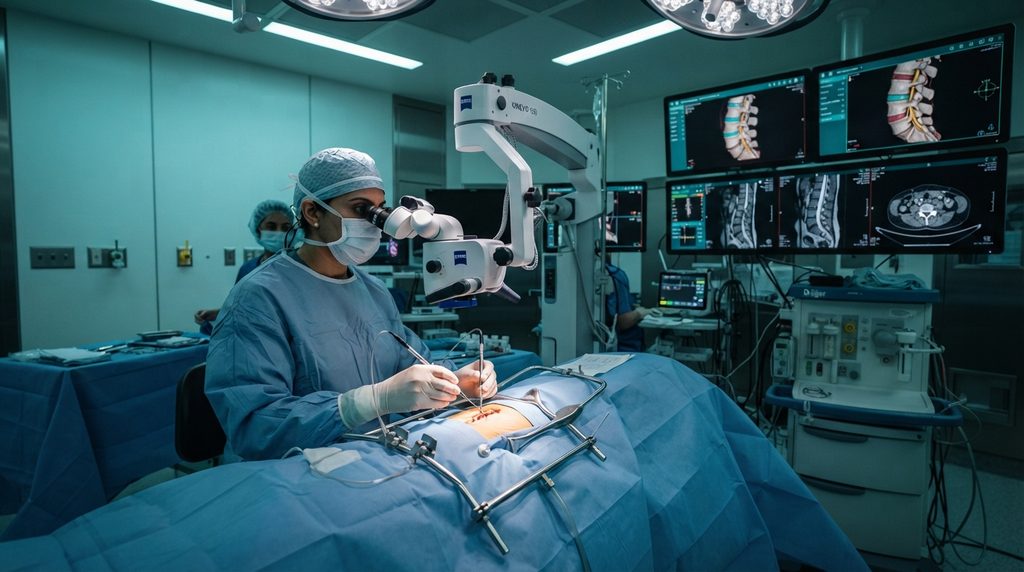
Microscopic PLID (Prolapsed Lumbar Intervertebral Disc) Surgery—commonly known as Microdiscectomy—is considered the gold-standard surgical treatment for severe slipped discs in Bangladesh. It utilizes a high-powered operating microscope to provide high-definition 3D magnification, allowing neurosurgeons and spine specialists to remove the herniated disc fragment through a tiny 1.5–2 cm incision while protecting neighboring spinal nerves.
While nearly 80% to 90% of PLID patients recover through non-surgical conservative treatments (medications, rest, and physiotherapy), surgery becomes essential when nerve compression is severe or non-surgical methods fail to provide relief.
Key Benefits of Microscopic PLID Surgery
- High Precision: Operating microscopes magnify nerve fibers and small blood vessels up to 20–40 times, minimizing the risk of accidental nerve injury.
- Minimal Muscle Trauma: Uses tiny tubular retractors to gently push muscles aside rather than cutting major back tissue.
- Faster Recovery: Most patients can walk within 12 to 24 hours after surgery and return home in 1 to 3 days.
- Reduced Pain and Scarring: Small incisions require fewer stitches (often cosmetic/absorbable), resulting in minimal post-operative back pain and smaller scars.
Best Hospitals for Microscopic PLID Surgery in Bangladesh
Bangladesh features both government specialized centers and private tertiary hospitals equipped with advanced operating microscopes (such as ZEISS systems), real-time C-arm X-ray guidance, and intraoperative nerve monitoring setups.
Top Specialized & Government Hospitals:
- National Institute of Neurosciences & Hospital (NINS), Agargaon, Dhaka: The premier public institution for neurosurgery, routinely performing microscopic discectomy at highly subsidized government costs.
- National Institute of Traumatology & Orthopaedic Rehabilitation (NITOR / Pongu Hospital), Dhaka: Houses specialized orthopedic spine units equipped for complex spinal decompressions and disc repairs.
- Bangabandhu Sheikh Mujib Medical University (BSMMU), Shahbag, Dhaka: Renowned for research-backed care and experienced faculty across its Neurosurgery and Orthopedic Spine divisions.
Top Private Hospitals:
- Evercare Hospital (Dhaka & Chattogram): Fully equipped with modern digital operating suites, high-powered microscopes, 24/7 dedicated Neuro-ICU support, and specialized spine surgical teams.
- Bangladesh Spine & Orthopaedic Hospital (BSOH), Kallyanpur, Dhaka: A specialized hospital dedicated exclusively to spine and orthopedic care.
- Square Hospital, Dhaka: Offers state-of-the-art microdiscectomy surgeries, experienced neuro-anesthesia care, and integrated post-op physiotherapy setups.
- United Hospital & Labaid Specialized Hospital, Dhaka: Known for senior neurosurgical teams handling primary and recurrent PLID surgeries.
Costing of Microscopic PLID Surgery in Bangladesh
The total cost of Microscopic PLID surgery varies based on the facility type (public vs. private), duration of hospital stay, room type, and whether single or multi-level discs are involved.
| Expense Category | Public Hospitals (NINS / NITOR / BSMMU) | Top Private Hospitals (Evercare / Square / BSOH) |
| Total Estimated Cost | BDT 30,000 – BDT 80,000 | BDT 150,000 – BDT 350,000+ |
| Cabin / Bed Stay (Per Day) | Subsidized / BDT 1,000 – 3,000 | BDT 6,000 – 18,000 |
| Surgical & OT Charges | Free / Minimal | BDT 90,000 – 220,000 |
| Specialized Consumables / Anesthesia | BDT 15,000 – 35,000 | Included or BDT 30,000 – 60,000 |
Note: Pre-operative lumbar MRI scans (BDT 8,000–14,000) and post-operative physiotherapy sessions are billed separately.
Step-by-Step Surgical Process
- Pre-Operative Preparation: Lumbar MRI scans identify the precise disc location (commonly L4–L5 or L5–S1). Blood work, ECG, and anesthesia clearances are completed.
- Anesthesia & Positioning: The patient is placed under general anesthesia in a face-down (prone) position.
- Micro-Incision & Localization: Real-time C-arm fluoroscopy confirms the exact spinal level. A 1.5–2 cm incision is made directly over the herniated site.
- Microscopic Resection: The operating microscope is swung into place. The surgeon moves the nerve root aside and extracts the offending disc fragment to relieve pressure.
- Closure: Wounds are closed cleanly with cosmetic sutures.
- Recovery: The patient moves to post-op recovery and is typically up and walking within 12 to 24 hours.
Frequently Asked Questions (10 FAQs)
1. What is Microscopic PLID surgery?
It is a minimally invasive spine operation that uses a surgical microscope to remove herniated disc tissue pressing against spinal nerves, relieving sciatica and back pain.
2. How does Microscopic surgery differ from Open PLID surgery?
Microscopic surgery uses a tiny 1.5–2 cm incision and heavy magnification, causing far less muscle damage, less bleeding, and offering faster recovery than traditional open surgery.
3. When is Microscopic PLID surgery necessary?
Surgery is indicated when non-surgical treatments (rest, medication, physiotherapy) fail after 6–8 weeks, or immediately if there is severe muscle weakness or loss of bowel/bladder control.
4. Will Microscopic PLID surgery cause paralysis?
No. Permanent paralysis is extremely rare because high-power microscopes allow surgeons to see every nerve fiber clearly, minimizing the risk of damage.
5. How long is the hospital stay after Microscopic PLID surgery in Bangladesh?
Patients typically spend 1 to 3 days in the hospital before being discharged.
6. How soon can I walk after surgery?
Most patients are encouraged to stand and take assisted steps within 12 to 24 hours post-operation.
7. Can a herniated disc recur after Microscopic surgery?
There is a 5% to 10% chance of disc recurrence at the same level. Maintaining good posture, core strength, and healthy lifting habits reduces this risk.
8. How long does it take to return to work?
Desk-job workers generally return to work in 2 to 4 weeks. Heavy physical labor or lifting should be avoided for 8 to 12 weeks.
9. Are government hospitals in Bangladesh safe for this procedure?
Yes. Public centers like NINS and BSMMU perform microscopic discectomies daily with expert neurosurgical faculty at low costs.
10. Is physical therapy required after Microscopic PLID surgery?
Yes. Guided post-operative physical therapy helps strengthen back and core muscles, ensuring long-term recovery and preventing future spine issues.